
The Atlas Brief - Vol VI · June 2026

Editor's Note — June 2026.
June. Pride Month. The one month of the year when the rainbow flags come out, the corporations update their logos, and a significant portion of the population remembers, briefly, that LGBTQIA+ people exist.
We exist all year, for what it's worth.
But June is also the month that Stonewall happened, June 28, 1969, and so June is when we remember what it cost to get here, and how far here still is from where we need to be. This edition is our Pride edition. Not because we planned it that way exactly, but because the work found its own shape, as it tends to.
You'll find a deep dive into the housing crisis that names, honestly, who it hits hardest, including LGBTQIA+ Australians, and particularly trans young people, at rates that should stop anyone in their tracks. You'll find a piece on the history that keeps getting erased, the trans people who existed thousands of years before anyone decided their existence was controversial. And you'll find a celebration of the film and television that got it right, and the people who had to be brave to make it.
It is, in the end, an edition about who gets seen, who gets housed, who gets remembered, and who gets to tell their own story. Which is most of what any of it is ever about.
A few other things worth noting before you dive in.
The federal budget landed last month, and it was, by Australian standards, genuinely surprising. After decades of political caution so complete it had become its own kind of paralysis, a government finally moved on negative gearing and the capital gains tax discount. Not perfectly, not sufficiently, but moved. We cover it in depth in the housing piece, along with an honest assessment of what it will and won't do.
The deeper observation is this: the Albanese government spent three years being very careful not to do anything that might frighten anyone, and nearly lost to a party whose primary policy platform appears to be sustained grievance. The lesson, apparently, is that governing, actual governing, making decisions, bearing political risk, is less dangerous than the alternative. File that under things that should have been obvious.
And then there is the weather.
It is June on the Sunshine Coast. It is supposed to be dry. It is not dry. Queensland has been receiving rainfall that has no business being here in what is nominally our dry season, and earlier this year Cyclone Narelle, described by meteorologists as powerful, unusual, and long-lived, made multiple landfalls across Queensland, the Northern Territory and Western Australia in March, late in the season and well outside normal patterns.
These are not isolated events. They are data points. The kind that accumulate quietly until one day they are impossible to ignore. Australia's climate scientists have been telling us for years that a warmer atmosphere means more intense weather events, more rainfall where there was drought, more drought where there was rainfall, and tropical systems pushing further south and later into the year than they used to.
We are living inside that prediction now. Not in the future. Now.
It is a strange thing to note in a Pride edition. But Pride has always been about the right to exist in a world that would prefer you didn't, and that instinct, it turns out, applies to more than one kind of existence.
Happy Pride Month. Read everything. Tell someone you love them.
— The Archivist
The Brief
Better at Being Human
What fiction does to your brain, and why it matters that we're reading less of it
There is a study that should probably be taught in every school in the country, and almost nobody has heard of it.

At the University of Toronto, psychologists Maja Djikic, Keith Oatley and their colleagues spent years measuring what happens to people when they read fiction, not what they say happens, but what they actually do when you test them. The finding, replicated across multiple studies, is straightforward and slightly startling: people who read fiction are measurably more empathetic than people who don't.
Not self-reportedly more empathetic. Not "I feel like I understand people better." Measurably. Demonstrably. On tasks designed specifically to rule out the possibility that they were just telling researchers what they wanted to hear. Two of the best‑known of these papers are literally titled “Reading other minds” and “Exploring the link between reading and empathy.”
The researchers also found something that lands harder the longer you sit with it. People who read more fiction tended to report stronger social connection and support. People who gravitated to non‑fiction instead were, on average, lonelier.
Read that again. The people reading essays, reports, articles, the serious, improving, informative reading, were more likely to feel alone. The people reading novels were better connected to other human beings.
It is not that non‑fiction is bad for you. It is that, when it crowds out stories, something quietly important goes missing.
Here is what fiction actually does, as best we understand it. When you read a novel, your brain does not treat it as passive information. It simulates it. The neural systems that activate when you imagine performing an action are the same ones that light up when you read about a character performing it. Your brain runs a kind of social simulation, inhabiting another consciousness, navigating their decisions, feeling the weight of their circumstances from the inside. You are, in a neurologically meaningful sense, practising being someone else.
This is not a metaphor. This is what the imaging studies show.
The technical term for it is theory of mind, the ability to model other people's mental states, to understand that other people have experiences, beliefs, and feelings that differ from your own. It sounds obvious. It is, apparently, a skill. One that requires practice. One that atrophies without it.
And we are, as a culture, practising it less.
Fiction reading has declined steadily across most of the developed world for two decades. It has been replaced not by other reading, but by screen time. Short‑form. Reactive. Algorithmically curated to confirm rather than challenge. Our attention span for sustained narrative has shortened. The time we spend inside someone else’s consciousness, genuinely inside a fictional mind, following their logic, inhabiting their world, has shrunk with it.
This matters for reasons that go beyond the cultural hand-wringing about people not reading enough Dickens.
Every piece in this edition is, in one way or another, about what happens when people fail to imagine lives different from their own. The landlord who cannot conceive of being the tenant. The politician who cannot imagine sleeping rough. The parent who cannot fathom what it costs their child to tell the truth about who they are. These are not failures of information. They are failures of imagination.
Empathy is not a feeling. It is a capacity. And like any capacity, it can be built or it can be neglected.
The technology we invented for building it is thousands of years old. It fits in your hand. It works without wifi.
We just have to actually use it.

There is a reasonable question about television. Prestige drama, complex characters, moral ambiguity, sustained narrative, this does something. Studies suggest that watching fictional TV with high emotional engagement can nudge theory of mind in the right direction. But the effect is weaker, less consistent, and more dependent on the viewer choosing to do cognitive work that the medium does not demand. Reading is not passive. Your brain generates the images, the voices, the spaces. Television hands them to you. Neurologically, the difference is the difference between exercising a muscle and watching someone else exercise theirs.
And before you conclude that this is a problem invented by the printing press, it isn't. Before mass literacy, humans told stories aloud. Homer. The griots of West Africa. The bardic traditions of Celtic Europe. Aboriginal Dreaming stories. Oral storytelling served much the same neurological function: inhabiting characters, rehearsing moral complexity, practising the experience of being someone else. The printing press did not invent this technology. It democratised it. What we are losing as reading becomes solitary and then scarce is not a modern hobby. It is something we have been doing around fires for as long as we have been human.
This makes the current decline not a modern problem. Just the latest version of an ancient one.
What we are losing as reading becomes solitary and then scarce is not something we invented recently. It is something we have been doing around fires for as long as we have been human. If we want to get better at being human to one another, in housing, in politics, in families, we could do worse than to start by picking up a novel.
Sources & Further Reading
Deep Dive
The Great Australian Lock-Out
How we built a housing crisis, who it hurts most, and what the 2026 reforms actually do
There is a number that explains the Australian housing crisis better than any policy paper ever will.
In the early 2000s, the median Australian home cost roughly four times the median household income. Two decades later, national medians sit above eight times, and in Sydney, more than fourteen. The median Sydney house price hovers around $1.75 million.1
Let that breathe for a moment. Not a harbour-side penthouse. The median. The middle of the pile. The median Sydney house price is now $1.75 million.
Prices did not drift away from wages. They were pushed, by decades of deliberate policy choices, by governments of both persuasions, that turned the family home from a place to live into the country's favourite tax shelter. We built this. Brick by subsidised brick.
The Machine That Made It
To understand how we got here, you need to understand two pieces of tax law that most Australians have heard of, but few can explain.
The first is negative gearing. When an investor buys a property and the rental income doesn't cover the mortgage and running costs, meaning the investment is running at a loss, those losses can be deducted against their other income. A property developer who also earns a salary can use their investment losses to reduce the tax they pay on their wages. The government, in effect, subsidises the loss. The logic behind it, when it was introduced, was that investors bearing short-term losses would eventually provide more rental supply, keeping rents lower for everyone. That is not what happened.
The second is the capital gains tax discount or CGT. Introduced by the Howard government in 1999, it meant that any asset held for more than a year, including investment property, attracted only half the normal capital gains tax rate when sold. Combined with negative gearing, this created an extraordinary incentive structure. You ran a loss while you held the property, and the government helped pay for it. Then, if prices rose, you sold at a profit and paid tax on only half the gain.
For a high-income investor, this was essentially free money. For a first-home buyer competing with that investor at auction, it was like playing Monopoly where the competition starts with hotels on Mayfair and Park Lane.
By the time anyone with genuine political will to change things came along, the share of investment property loans in total housing debt had roughly tripled. Nealry 90% of the capital gains tax discount benefit flowed to the wealthiest 20% of Australians.2 Housing had become less a place to live than a way for people who already had money to accumulate more of it: legally, enthusiastically, and with the government's blessing.
It is worth noting that this was not entirely uncontested. The Hawke government actually abolished negative gearing in 1985. What followed was a political scare campaign from property investors and real estate lobbies claiming it would destroy the rental market. Hawke reinstated it two years later. The lesson politicians took from that episode was: do not touch negative gearing. That lesson held for nearly forty years.
When Prices Cut Loose
There is a moment in any market when participants stop asking "what is this worth?" and start asking "what can we get away with?" In Australian housing, that moment arrived quietly somewhere in the 2010s, and COVID kicked the door off its hinges.
The investor bias built over decades had already done one crucial thing: it decoupled house prices from wages. Once that relationship broke, once the data showed that prices could rise 10, 15, 20% in a year while wages grew at two, a certain logic took hold among those with property portfolios. Prices, it turned out, did not need to be tethered to anything. Not incomes. Not construction costs. Not rental yields. The market would pay whatever the market would bear, because the alternative, for a renter, for a desperate first-home buyer, was worse.
This is not a new dynamic. Australians watched the supermarkets run exactly the same play during the pandemic. Coles and Woolworths did not merely pass on increased costs during COVID. They made record profits. The crisis created cover for pricing behaviour that would have attracted more scrutiny in ordinary times, and when the crisis passed, the prices did not come down. The new floor became the new normal.
Housing did the same thing, at scale, with government assistance. COVID's low interest rates flooded the market with cheap money. Remote work briefly made every suburb in the country a potential option. Investors who had been cautious became aggressive. Prices surged in cities, in regional towns, in places that had been affordable by virtue of being overlooked. When interest rates then rose sharply, the expected crash did not come because the supply shortage was so severe that even a hobbled market had nowhere to fall to.
The instability COVID injected into the housing system is still reverberating. It shook loose whatever remained of the connection between what a house costs and what it is worth, and that connection has not been reattached.
Where We Ended Up
The consequence of four decades of investor-friendly tax settings is a market in which the people who need housing most are consistently outbid by the people who need it least.
Housing affordability stress has surged.
32% (2014-2015)
Homelessnes Services provided where affordability is cited as the primary cause
53% (2024-2025)
Specialist Homelessness Services Annual Report 2024–25 — AIHW
The rental market is tight to the point of cruelty. Vacancy rates in major cities have hovered near historic lows. Rents have surged. The waiting lists for social housing, public housing, community housing, and the safety net beneath the safety net stretch to years in most states, and in some cases, to decades.
ABS — 2021 Census of Population and Housing
Approximately 1,043,776 dwellings sat empty on the same Census night that counted 122,000 homeless Australians.
The rental market is tight to the point of cruelty. Vacancy rates in major cities have hovered near historic lows. Rents have surged. The waiting lists for social housing, public housing, community housing, and the safety net beneath the safety net stretch to years in most states, and in some cases, to decades.
Australia's Housing Australia Future Fund aims to build 40,000 social and affordable homes over five years. The estimated shortfall is 640,000.5
The gap between those numbers is not a rounding error.
Building in the Wrong Places
There is another dimension to this crisis that rarely makes it into the housing conversation, possibly because it requires thinking about the country as a whole rather than as a collection of capital city postcodes.
Australia is an enormous country with a small population, the overwhelming majority of which is crammed into a handful of coastal cities that are now, by any measure, unaffordable. And yet the infrastructure investment that might shift that equation, that might make it possible and attractive to live, work, and raise a family somewhere other than inner Sydney or inner Melbourne, has been fitful, politically motivated, and heavily concentrated in the cities that already have the most.
Billions have been committed to metropolitan rail, tunnels, stadiums, and precincts in cities where a two-bedroom apartment costs a million dollars, and a house in the middle ring is the province of dual-income professionals. Meanwhile, regional infrastructure, reliable fast internet, hospital services that do not require a two-hour drive, rail connections that do not feel like a punishment, remain underfunded, delayed, or cancelled entirely. The infrastructure that would make regional living genuinely viable for knowledge workers, for young families, for anyone who does not need to be physically present in a CBD, has not arrived in any systematic way.
The principle is not complicated. A town connected to the modern economy can grow and sustain itself. A town isolated from it, hollows out. Remote work made this more possible than it has ever been. For a brief moment after COVID, Australians were actually moving to regional areas in meaningful numbers. What stopped that from becoming a structural shift was, in part, the absence of the infrastructure to make it stick: the school that is well-resourced, the hospital that is staffed, the internet that works when it rains, the train that gets you to the city when you need to be there.
Relieving pressure on capital city housing markets is not only a matter of building more houses in those markets. It is also a matter of building a country in which those markets are not the only option. That requires infrastructure decisions made with a long view and a national map, not a marginal seat calculator.
Who Owns the Ground
Here is a fact that tends to reframe the entire housing conversation:
HIA-Cotality — Residential Land Report, hia.com.au, 2025
Land now makes up 75% of the value of Australia's housing stock — up from 54% in 1990.
What you are buying, in most established suburbs of Australia's major cities, is not a house. It is dirt.
This matters because dirt, unlike houses, can be sat on. And in Australia, it reliably is. A knockdown block in a desirable suburb routinely costs two or three times what it would cost to rebuild the house on top of it. The dwelling depreciates. The dirt appreciates. The house, in this economy, is almost incidental.
This tells you something important about what is actually being bought and sold in the Australian housing market. It isn't a shelter. It isn't craftsmanship or design or the particular arrangement of rooms. It is location, which is to say, it is scarcity. And scarcity, unlike a house, can be manufactured.
Land banking is not a conspiracy theory. It is a documented feature of the Australian development market. Developers acquire land and hold it, releasing supply slowly, timing releases to market conditions, waiting for prices to peak before bringing stock to market. The incentive structure is straightforward: land held off the market maintains scarcity, and scarcity maintains price. There is nothing illegal about it. It is rational behaviour within the rules as written.
What makes it a systems problem is who writes the rules.
Local councils across Australia are the bodies that zone land, approve developments, determine what gets built, and where and when. They are also disproportionately populated by people with a direct financial interest in those decisions. Real estate agents. Developers. Property investors. Landowners. Not because of any particular corruption, but because local government tends to attract people with skin in the local property game, and because those people tend to stand for council. The structural conflict of interest is not an aberration. It is endemic.
A councillor who is also a real estate agent does not need to do anything improper for the conflict to operate. Every rezoning decision, every new development corridor, every approval delay or acceleration affects the value of assets in their professional orbit. The incentive to move slowly when prices are low and quickly when they are high, to favour configurations that maximise land value over those that maximise housing supply, these pressures exist whether or not anyone acts on them consciously.
This pattern plays out in capital cities and regional towns alike. A mining boom transforms a regional centre, land values surge, and the people positioned to capture the uplift are predictably, reliably, across dozens of towns, the people who already owned land and sat on the bodies that decided where development went. The boom's benefits are real and broadly felt. But they are not equally felt. The system reliably delivers a larger share to those who were already inside it.
The economist's remedy for this has been known for over a century: a land value tax. Tax the unimproved value of the land itself, not the structure on it. This removes the speculative incentive to sit on land and wait; idle land becomes costly to hold, development becomes relatively more attractive, and the artificial scarcity that inflates prices is reduced. Australia's own Henry Tax Review recommended moving in this direction in 2010. It was received politely and ignored completely. Every government since has found something more politically comfortable to talk about instead.
There is one more thing worth knowing about Australian land ownership. When you buy property in Australia, you buy surface rights only. The minerals beneath your land, the gold, the coal, the oil, the gas, belong to the Crown. Always have. A mining company can apply for an exploration licence over your property and, if granted, access it. You receive compensation. You do not receive a share of what comes out of the ground.
In parts of the United States, landowners own the mineral rights beneath their property. Some Texas farmers became millionaires when oil was found under their fields. In Australia, the same discovery mostly enriches the state and the mining company's shareholders. Not you.
And yet the land price is yours to pay in full.
The Part Nobody Talks About
Housing data is almost always presented as a general crisis. It is not a general crisis. It falls harder on some people than others, and the people it falls hardest on are, not coincidentally, the people least visible in the policy conversation.
ABS General Social Survey 2014; Lim et al., Springer (2025)
| Group | Homelessness Experienced by Group |
| Gay & Lesbian Australians | 34% |
| Bisexual Australians | 20.8% |
| Heterosexual Australians | 13.4% |
| LGBTQIA+ vs General Population | x2 |
| Trans Youth | 1 in 5 |
For young people, the numbers are sharper still. In some Australian cities, more than one in four homeless young people identify as part of the LGBTQIA+ community. One in five trans young people has experienced homelessness at some point in their lives.7 The primary cause is not drug use, not mental illness, not the things the culture wars want you to look at. The primary cause is family rejection.
A teenager comes out. A parent responds with shame, silence, or the front door.
The child ends up couch surfing, in boarding houses, or on the street, not because they are troubled, but because they told the truth about who they are, and the people who were supposed to love them unconditionally put a condition on it.
Once they are in the private rental market, every other structural problem in the system, short leases, discrimination, and rising rents, amplifies that first act of rejection. Trans and gender-diverse Australians report discrimination from landlords at rates that should embarrass anyone pretending the system is neutral. Rainbow families face additional barriers in both buying and renting. The compounding effect, family rejection into rental discrimination into an unaffordable market, means that for some LGBTQIA+ Australians, the housing crisis is not a background condition. It is the story of their twenties.
Any honest account of the housing crisis that does not name this is not giving you the full picture.
What the 2026 Reforms Actually Do
The May 2026 federal budget announced what forty years of political caution had avoided: changes to negative gearing and the capital gains tax discount.
The headline moves, simplified: negative gearing is being restricted for newly acquired established properties, meaning new investors can no longer fully offset losses on existing homes against their wage income. It remains available for newly built properties, the intention being to tilt investment demand toward adding new supply rather than competing for the same existing stock. The capital gains tax discount is being scaled back, replaced with an indexation-style adjustment that reduces the after-tax reward for the hold-and-flip strategy that defined the investor boom.
Existing investments are grandfathered, which is why the effects will phase in over years rather than arriving like a change of weather.
The tax reforms were not the only housing measures in the 2026 budget. A $2 billion Local Infrastructure Fund aims to support 65,000 new homes over a decade. A further $3.1 billion was committed to build 100,000 new homes, with $1.2 billion for states and territories to support housing infrastructure. Taken together, the package represents the most comprehensive federal housing intervention in decades.
What the evidence suggests this will actually do: modest downward pressure on prices. Treasury modelling suggests house price growth could moderate by around 2 percentage points. Commonwealth Bank modelling puts the impact at around 1 percentage point reduction in annual price growth by 2027.8
What it will not automatically do: fix the rental market. If investors exit faster than new supply and social housing can fill the gap, which is the realistic near-term scenario, rental pressure will increase before it eases. The reforms are necessary. They are not sufficient.
What Is Still Missing
Tax reform changes who owns housing. It does not build housing. Australia needs both, simultaneously, at a scale it has not attempted since the postwar era.
The shortfall in social and affordable housing is structural. Closing it requires sustained public investment, not a future fund, not a five-year target that falls 640,000 homes short, but the kind of deliberate, unglamorous commitment that built public housing estates across the country in the 1950s and 60s. Those estates are now ageing, underfunded, and being sold off in some states. The policy instinct that built them has not been recovered.
For the people the market fails first, the young, the low-income, the LGBTQIA+ youth with nowhere to go, the single parents, the elderly renters in an investor-friendly market, tax concession reform is a distant upstream intervention. What they need is housing they can actually live in, at a price that does not consume everything else. The 2026 reforms are the beginning of an answer. They are not the answer.
There is also a conversation Australia has been carefully avoiding for a decade, which is the one about population.
Australia's total fertility rate has sat around 1.5 for years. The replacement rate, the number at which a population maintains itself without immigration, is 2.1. At 1.5, a country loses roughly a quarter of its population each generation. This is not an opinion. It is arithmetic.
The reasons are not mysterious. Having children in Australia is expensive, logistically brutal, and often incompatible with the housing and financial reality most working-age Australians are navigating. Who, in genuine good conscience, wants to raise a family through a rental crisis? Who can afford the childcare? The demographic data reflects a population that has made a rational, if collective, decision: we cannot afford to. That decision is not going to reverse itself while childcare costs the earth, public education is underfunded, healthcare requires private insurance to be reliable, and renting with children means moving every twelve months at a landlord's discretion.
So the country fills the gap with immigration. And here is where the national conversation becomes particularly dishonest.
Immigration is not the cause of the housing crisis. The housing crisis was built over decades of deliberate policy choices before immigration rates had any meaningful effect on it. But immigration does add to demand in a market that is already supply-constrained, and when governments are reluctant to fix the supply problem, immigration becomes the most visible variable and therefore the easiest scapegoat. This is politically convenient for everyone who does not want to talk about negative gearing, infrastructure, or childcare.
The honest version of this conversation goes like this: Australia, with a birthrate of 1.5, cannot sustain its population without immigration. It is a large, resource-rich country with a small population, and population collapse, which Russia is currently experiencing and which China is about to experience as the consequences of the one-child policy arrive in full, is not an abstract concern. It is what happens when you let the demographic arithmetic run. The question is not whether to have immigration. The question is what kind, at what scale, with what support, and whether we are being honest about the refugee numbers, because the forces generating refugees worldwide are not abating. Famine, climate disruption, war, and economic collapse are producing displaced people faster than wealthy countries are accepting them.
Australia can do better on this. It has done better before. The postwar immigration program that built this country's middle class and physical infrastructure was ambitious, deliberately structured, and accompanied by the public services: housing, healthcare, and education, which allowed new arrivals to contribute and belong. We have since dismantled much of that apparatus and then expressed surprise that immigration feels more chaotic and contentious.
The policies that made Australia wealthy in the twentieth century were not complicated: strong taxation, a genuine social contract, welcoming immigration, and public investment in the things that let people participate. Free healthcare. Free education. Affordable housing. A fair wage. Every reduction in those foundations has made us poorer and more fragile than we look on paper. The housing crisis is not an isolated failure. It is the accumulated cost of treating those foundations as optional.
The Great Australian Dream was always the dream of a particular Australian, one with income, with family wealth, with a mortgage the banks would approve. For everyone else, it has been a view from the pavement.
We have started, cautiously, to rebuild. How far we go is still being decided. The decision is ours, if we are willing to admit what we broke, and who we broke it for.
Sources & Further Reading

Systems & Signals
This Is Not New
The mechanism of erasure, and the people it keeps failing to erase
Here is how the machine works.
Every generation, someone announces that gender-diverse people are a new and troubling development, a symptom of modernity, of social media, of permissive parenting, of something that went wrong recently. Every generation, this announcement is made with great confidence by people who have not checked. And every generation, if you look even briefly at the historical record, you find the same thing: they were always here.
The machine is not simply bigotry, though bigotry operates it. The machine is erasure. Burn the records, rewrite the history, call it a trend. Repeat as required.
The extraordinary thing about this machine is how well-documented its own operation has become.

Sumer, ~2000 BCE
Before Berlin. Before Washington. Before Stonewall. Before any of these stories, there were the gala.
The gala were priests of the goddess Inanna — later Ishtar — in ancient Mesopotamia, documented in cuneiform texts going back to at least 2000 BCE and likely earlier. They were male-born people who entered Inanna's service, adopted female names, and spoke exclusively in eme-sal, a Sumerian dialect that linguists classify, without ambiguity, as "the women's language." It was the dialect reserved for female deities and their priesthood. A hymn to Ishtar from the same period describes her power to "turn a male into a female and a female into a male."
This is not contested fringe history. It is in the cuneiform. It is in the academic literature. It is roughly 4,000 years old.
When someone tells you this is new, they are off by at least four millennia. The machine has simply done its work in the background.
Washington D.C., 1886
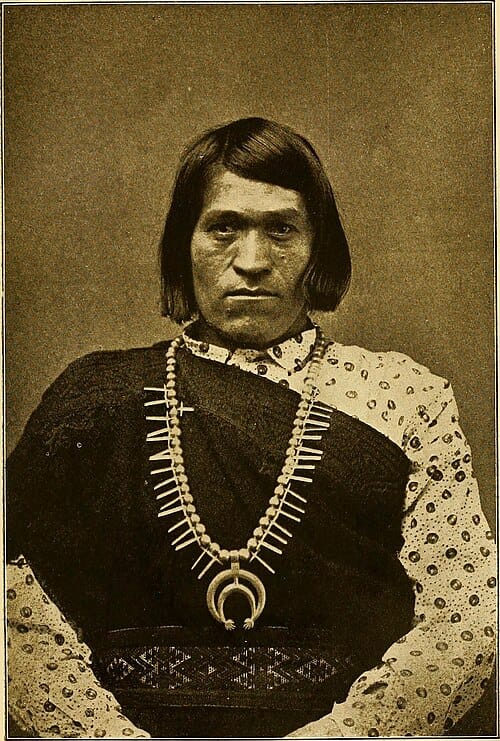
Thirty-three years before the Institut opened, a Zuni weaver and cultural ambassador named We'wha arrived in Washington for a six-month visit to the United States capital. We'wha was a lhamana, a Zuni term for a person who embodied both masculine and feminine roles and was recognised by the Zuni as a distinct third gender, doubly gifted, community leaders, and cultural authorities. The concept was not unique to the Zuni; some form of it existed in hundreds of Indigenous nations across North America, in what scholars now call Two-Spirit identity.
We'wha was received in Washington as a dignitary. They met senators, attended congressional sessions, wove at the Smithsonian, and were reported on with fascination by a press that described them as the "Zuni princess." They were received at the White House, where they met President Grover Cleveland and presented him and his new bride with a hand-woven wedding gift.
The thing the newspapers did not mention, because they apparently did not know, or did not ask, was that We'wha was male-bodied. This was not concealed. It was simply that no one in Washington had asked a question that, to the Zuni, would have made no sense. We'wha was We'wha. Lhamana was as ordinary and acknowledged in their community as any other role.
Washington's entire political establishment spent six months in the company of a Two-Spirit diplomat and appears to have found the visit entirely charming, then spent the next century insisting that this kind of person was a recent and foreign invention.
We'wha died in 1896, a decade after the Washington visit, mourned by their entire community.
Berlin, 1919
In the Tiergarten district of Berlin, a physician named Magnus Hirschfeld opened the Institut für Sexualwissenschaft, the Institute for Sexual Science. It was the first institution in the world dedicated to the scientific study of human sexuality and gender diversity. The Institute ran a clinic, a library, and a museum. It conducted the first large-scale surveys of sexual and gender identity. It employed gender-diverse staff. It performed some of the earliest documented gender-affirming surgeries. It housed a research archive of over 20,000 books and tens of thousands of personal testimonies, patient records, letters and photographs: the documented lives of people who had, until then, existed only in silence or in shame.
For fourteen years, the Institute was a place where people could walk in and be, for the first time, something other than a secret.
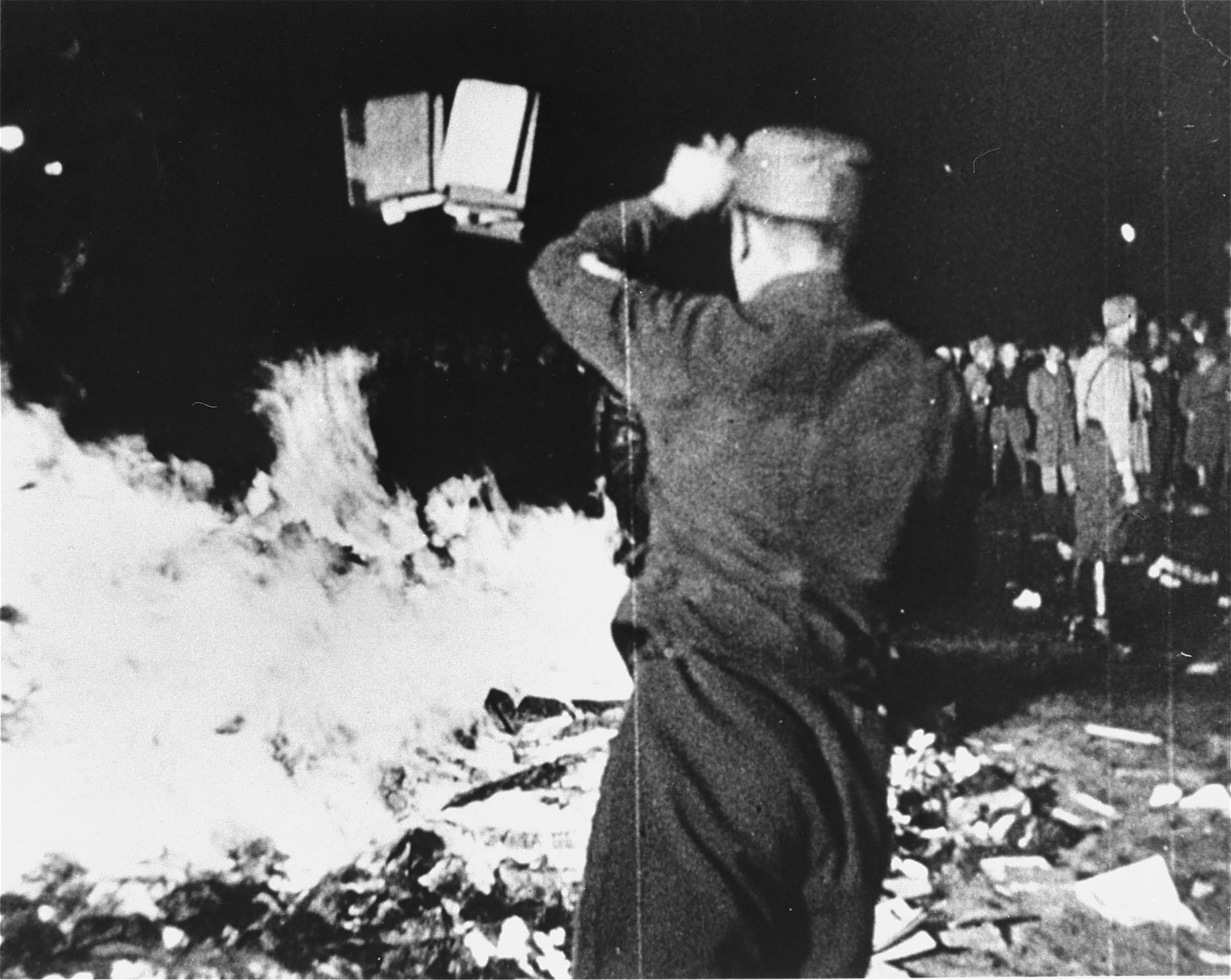
On May 6, 1933, four days after the Nazis seized control of German trade unions, three months after Hitler became Chancellor, a group of students from the German Institute for Physical Education marched to the Institut für Sexualwissenschaft shouting "Brenne Hirschfeld!" — Burn Hirschfeld. They beat staff, smashed the anatomical models, and seized the archive. Four days later, on May 10, approximately 20,000 books were carried to the Opernplatz and burned in a bonfire that became one of the most photographed images of the early Nazi regime.
Magnus Hirschfeld, Jewish, gay, and by this point safely in exile, watched newsreel footage of his life's work burning in Paris. He described it as "the most terrible moment of his life." He died in Nice two years later, on his sixty-seventh birthday, without returning to Germany.
The patient records that burned contained the documented histories of thousands of people. Not just data. Names. Lives. Evidence that they existed, that they had sought help, that someone had tried to help them. The Nazis understood, with characteristic precision, what they were burning: the proof that this was not new.
The Nazis did not invent this instinct. They industrialised it.
New York, 1969 (and 1973, and 1992)
This is the part of the story most people have heard a version of.
On the night of June 28, 1969, police raided the Stonewall Inn, a bar in Greenwich Village. It was not the first raid. It was the night the patrons, including a significant number of trans women of colour, drag queens, and street youth, fought back.
The Stonewall uprising is now recognised as the pivotal moment in the modern LGBTQIA+ rights movement. June is Pride Month because of what happened on that night.

The people at the front of the fight that night included a young Black trans woman named Marsha P. Johnson and a Latina trans woman named Sylvia Rivera. They were twenty-three and seventeen years old, respectively. Rivera had met Johnson six years earlier, when she was a homeless, runaway teenager on the streets of New York. "She was like a mother to me," Rivera later said.
In November 1970, Johnson and Rivera founded STAR House, Street Transvestite Action Revolutionaries, the first transgender-led organisation in the United States, the first trans youth shelter in North America, and the first organisation to advocate for trans sex workers as workers with labour rights. They funded it largely through their own sex work. They fed the young people who stayed there. They paid the rent when they could.
The mainstream gay rights movement, as it gained political traction through the 1970s, made a strategic calculation. Trans people, too visible, too radical, too associated with the street, were a liability. Respectability politics did not have room for them.
At the 1973 Christopher Street Liberation Day rally, Sylvia Rivera tried to speak. The crowd booed. She was pushed offstage. She took the microphone back and with her voice cracking with something between grief and fury, she said her piece.
Sylvia Rivera, 1973
"I've been trying to get up here all day for your gay brothers and your gay sisters in jail that write me every motherfucking week and ask for your help, and you all don't do a goddamn thing for them. [...] I have been beaten. I have had my nose broken. I have been thrown in jail. I have lost my job. I have lost my apartment for gay liberation. And you all treat me this way?"
The speech is now famous. In 1973, she was escorted away.
In 2019, a group selling recordings of the speech issued takedown notices across multiple platforms in an apparent attempt to become the sole commercial source. Someone tried to erase the record of the speech about erasure. The machine, running in real time, did what it always does.
Marsha P. Johnson was found dead in the Hudson River on July 6, 1992, six days after Pride. The police ruled it a suicide within hours, without investigation. The case was officially closed. Her friends and community did not believe it. After years of advocacy, the New York Police Department reopened the case in 2012 and reclassified her death as "undetermined." No one has been charged. The investigation remains open.
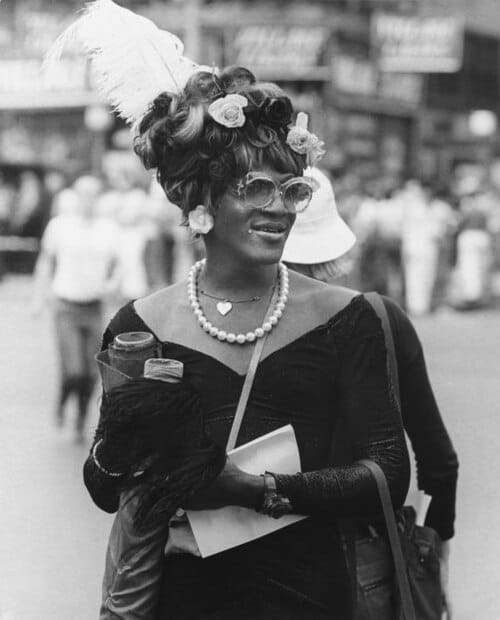
She was forty-six years old. She was known for wearing flowers in her hair, for giving away everything she owned to people who had less, and for a philosophy she summarised in three words: "Pay it no mind."
The Machine
The mechanism of erasure is not complicated, which is perhaps why it works so reliably.
Step one: destroy the evidence. Burn the archive. Rule the death a suicide. Rewrite the history book so that Stonewall was led by respectable gay men, not trans women of colour. Reclassify the lhamana as "berdache", an anthropological term now understood as a colonial imposition, and treat Two-Spirit identity as a curiosity rather than a living tradition. Pathologise. Criminalise. Forget.
Step two: wait a generation.
Step three: announce that this is new.
The people who operate this machine are not always acting in bad faith, which is perhaps the most important thing to understand about it. They genuinely believe what they are saying, because they grew up in a world where the previous generation's erasure had done its work. They look around and see no evidence of what came before, because the evidence was burned, or suppressed, or reclassified, or simply never included in the history they were taught. Their ignorance is real. It was manufactured for them by people who knew exactly what they were doing.
Which is why the counter-move matters.
Every time someone says "this is new" about a trans person, the accurate response is the historical record. We'wha in the White House in 1886. The Institut für Sexualwissenschaft in Berlin in 1919. Marsha P. Johnson at Stonewall in 1969, and at a microphone in 1973, and in the Hudson River in 1992. The Hijra of South Asia, present in Mughal court records for centuries and still a legally recognised gender category in India, Pakistan, and Bangladesh today. The Chevalier d'Éon, French diplomat and spy, who lived half their life publicly as a man and half publicly as a woman, about whom London betting markets in the 1770s ran a book on their "true" sex, a question d'Éon declined to resolve for anyone's convenience.
These are not outliers. They are data points from a very large dataset that someone, repeatedly, has tried to delete.
Why It Matters Right Now
In the mid-2020's, the political tide in multiple English-speaking countries has turned against trans people in ways that have not been seen in decades. Legislation restricting access to healthcare. Court decisions narrowing legal recognition. A cultural conversation that has, in some quarters, adopted the framing that trans identity is an ideology, a contagion, a thing that is being done to children by institutions and social media, rather than a thing that human beings have always been, and always will be, in every culture, in every era, for as long as we have records.
The machine is running.
The response to this is not primarily political argument, though political argument has its place. It is the record. The documented, verifiable, cross-cultural, multi-millenia record of human beings who existed in ways their societies could not easily categorise, who often found community and honour and love in doing so, and whose existence has been, with striking regularity, subject to organised attempts at erasure.
The trans community is not a trend. It is not a symptom. It is a thread in the human fabric so old that people keep burning the loom and discovering it has already been rewoven somewhere they have not looked yet.
They burned the books in Berlin in 1933. A copy of Hirschfeld's research survived in his colleagues' memories, in letters, in the minds of the people he trained. Knowledge, it turns out, is harder to incinerate than paper.
Marsha P. Johnson paid it no mind.
We'wha gave the President a wedding gift.
They were always here. They will always be here.
Brenne Hirschfeld did not work the first time. It will not work now.
Sources & Further Reading
- Third Gender Figures in the Ancient Near East — World History Encyclopedia
- Institut für Sexualwissenschaft — United States Holocaust Memorial Museum
- We'wha and Two-Spirit Identity — YES! Magazine
- At STAR House, Marsha P. Johnson and Sylvia Rivera Created a Home for Trans People
- Sylvia Rivera 1973 Speech Transcript — Internet Archive
Culture & Media
The Ones Who Went First
A celebration of the film and television that got it right — and the people who had to be brave to make it
Representation matters. The phrase has been repeated so often it risks sounding empty, which is a shame, because the evidence for it is overwhelming and the cost of getting it wrong, or not doing it at all, is measured in actual human lives. The stories we tell about who exists, who deserves love, and who gets to be the protagonist rather than the punchline shape the world young people grow up believing is possible.
This issue, we are not reviewing anything. We are saying thank you.
Ellen (1997)
On April 30, 1997, Ellen DeGeneres sat across from a therapist played by Oprah Winfrey, and her character said, out loud, on primetime American television: "I'm gay." The week the episode aired, DeGeneres appeared on the cover of Time magazine under the headline "Yep, I'm Gay." ABC immediately added a parental advisory to the show. Advertisers fled. The show was cancelled the following year. She didn't work significantly in television again for six years.
What she did in 1997 was genuinely brave, at a cost that turned out to be just as real. It shifted something in the culture, not everything, not immediately, but something. That moment belongs to history regardless of anything else, and history should say so.
But long before that Time magazine cover, four retirees in Miami were quietly doing something radical.
The Golden Girls (1985–1992)
Before almost anyone else was doing it, four older women in Miami were matter-of-factly treating gay people as people. Blanche's gay brother. Dorothy's lesbian friend Jean, who falls for Rose. A gay male couple whose commitment ceremony the girls eventually attend and celebrate, in 1991, on network television. The show never made an episode out of whether gay people deserved dignity. It just started from the assumption that they did. Sometimes the bravest thing you can do on television is to act as if the argument is already settled. In 1985. On NBC. That is not a small thing.
Will & Grace (1998–2006, 2017–2020)
A confession: the show's most important cultural contribution may have been studied more than it was enjoyed. Research genuinely showed it shifted American attitudes toward gay rights, because it put gay characters in people's living rooms every Thursday night for eight years, and it turns out that knowing someone, even fictionally, changes how you feel about them. Whether you loved the show or found it a little exhausting, the data is the data.
What the show undeniably got right was Jack McFarland. Where Will Truman was the acceptable face of gay on American television, professional, dignified, carefully non-threatening, Jack was the one who refused to be acceptable. He was magnificent and camp and unapologetic, and he didn't exist to make straight audiences comfortable. He existed to be himself, loudly, in primetime, at a time when that was still something that needed doing. He gave permission. Not to be Jack, necessarily, but to be authentically whatever you actually were, without editing yourself down to a size that fit someone else's comfort.
And then there was Beverley Leslie.
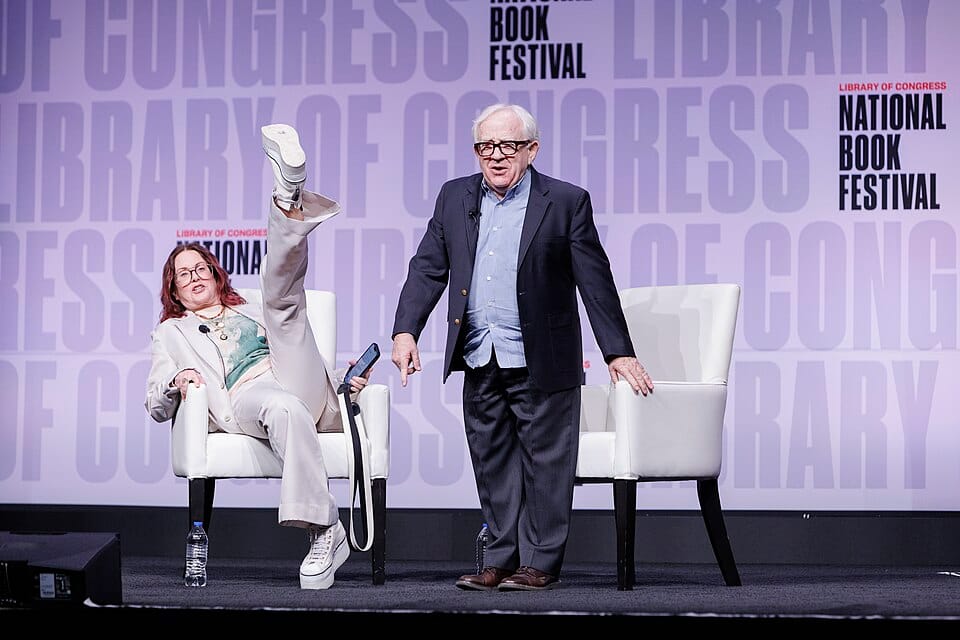
Leslie Jordan, who played Karen Walker's magnificently insufferable nemesis across multiple seasons, was one of those performers who seemed to operate by different comic laws than everyone around him. Every scene he walked into became his. He knew it. You knew it. He absolutely knew that you knew it.
In 2020, during the first COVID lockdown, Jordan was staying with his mother and identical twin sisters in Chattanooga, Tennessee, and bored. He started posting videos to Instagram, an app he had not known existed a year earlier. Just himself, in his house, being Leslie Jordan.
"What are y'all doing? This is awful. It's still March. How many days are in March?" Within weeks, he had nearly four million followers. A friend called from California to tell him he'd gone viral. "I said, 'No, no, I don't have Covid. I'm just in Tennessee.'"
He eventually reached 5.5 million followers. He died in October 2022, at sixty-seven, in a car accident, and the outpouring was that particular kind of grief reserved for people who made the world feel warmer just by being in it. He deserved every room he ever walked into.
Orange Is the New Black (2013–2019)
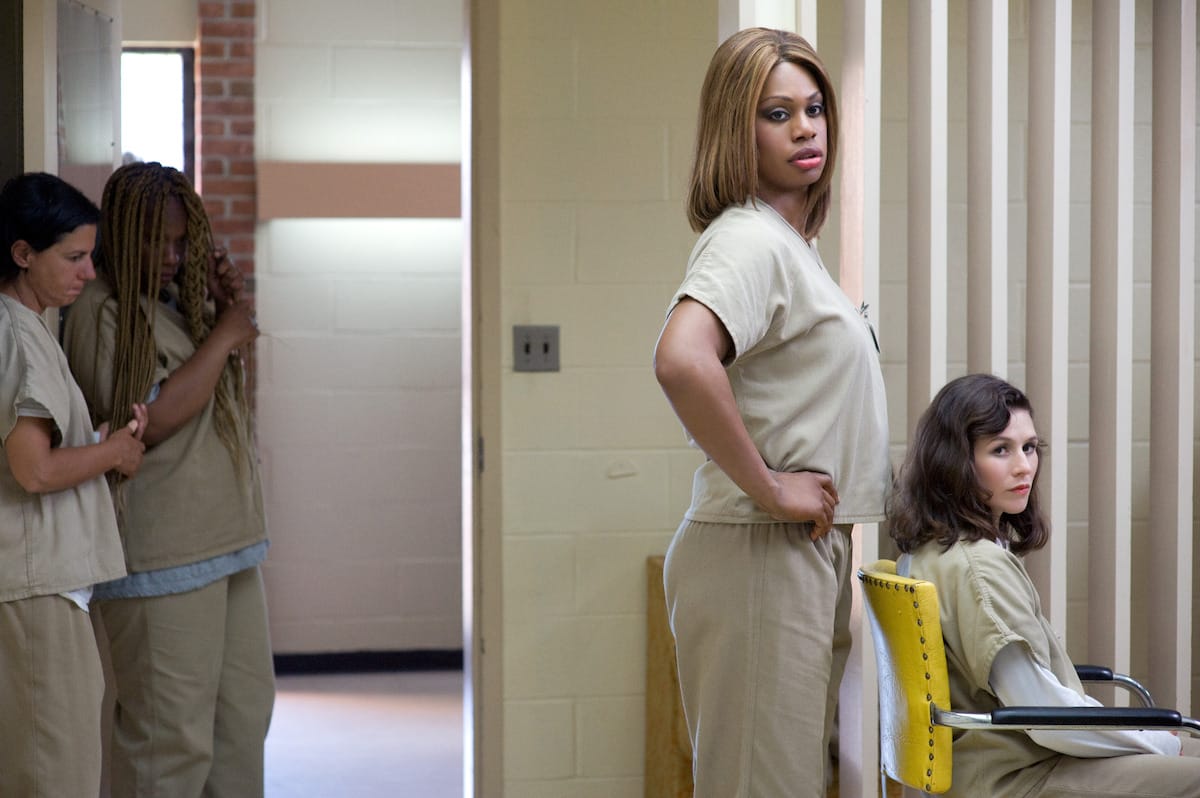
Netflix's prison drama gave Laverne Cox the role of Sophia Burset, a trans woman, a former firefighter, a mother, a full human being, and then let her play it. Cox's Emmy nomination in 2014 was the first for a transgender actress in a major acting category. The same year, she became the first openly transgender person on the cover of Time magazine, under the headline "The Transgender Tipping Point." That framing now feels both prescient and painfully optimistic, but the moment was real, and Cox earned every inch of it.
Pose (FX, 2018–2021)
If you haven't watched Pose, watch Pose. Set in the ballroom scene of late‑1980s New York, the same world that Marsha P. Johnson and Sylvia Rivera came from, Pose was created by Steven Canals, a gay Latino writer who had been trying to get the show made for years before Ryan Murphy came on board. That matters. This was not Hollywood deciding to tell the community's story. This was the community finally being given the means to tell it themselves.
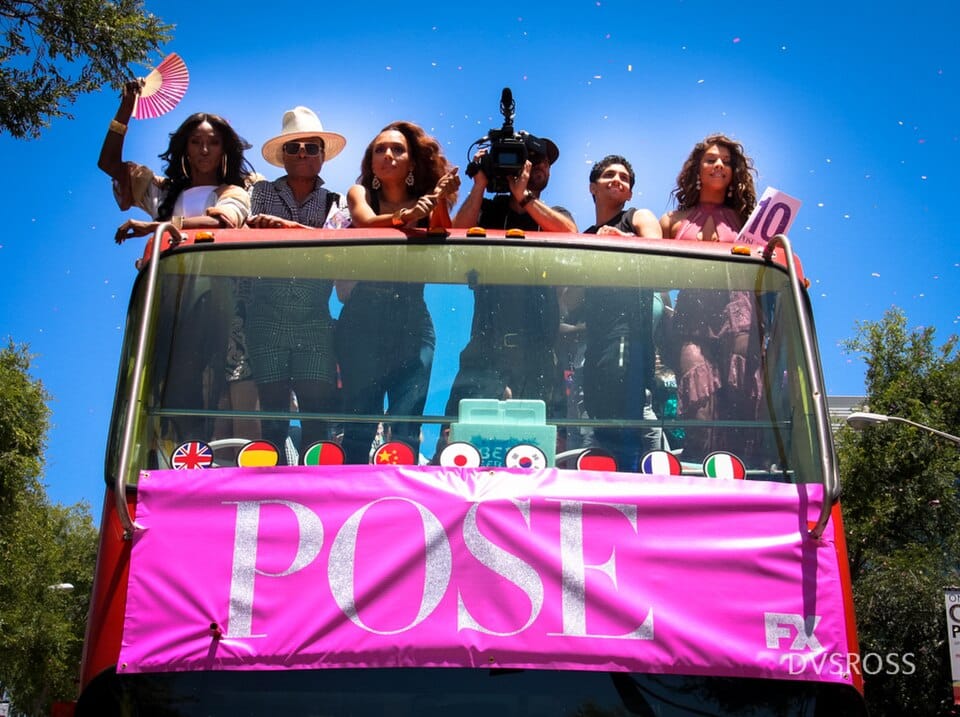
The show featured the largest cast of transgender actors in the history of scripted television. Billy Porter won the Emmy for Best Actor in a Drama in 2019, becoming the first openly gay Black man to do so. Michaela Jaé Rodriguez won the Golden Globe for Best Actress in a Drama in 2022, the first transgender actress to win a major TV acting award. The show is about chosen family, the AIDS crisis, survival, and joy. It is one of the best things television has made in the last decade.
While network sitcoms were inching forward, another kind of first was happening downtown.
Paris Is Burning (1990)
Before Pose fictionalised the ballroom world, Jennie Livingston documented it. This film, shot over several years in the late 1980s in New York, captures the ball culture that gave the mainstream "voguing," "reading," "shade," and also a window into a community of largely Black and Latino LGBTQIA+ people building joy and chosen family in the middle of the AIDS epidemic. Several of its subjects died before the film was released. Venus Xtravaganza, a young transgender woman who appears throughout, was murdered during filming. Watch it as a companion piece to the Systems & Signals piece this issue. Watch it regardless.
The Umbrella Academy (2019–2024)
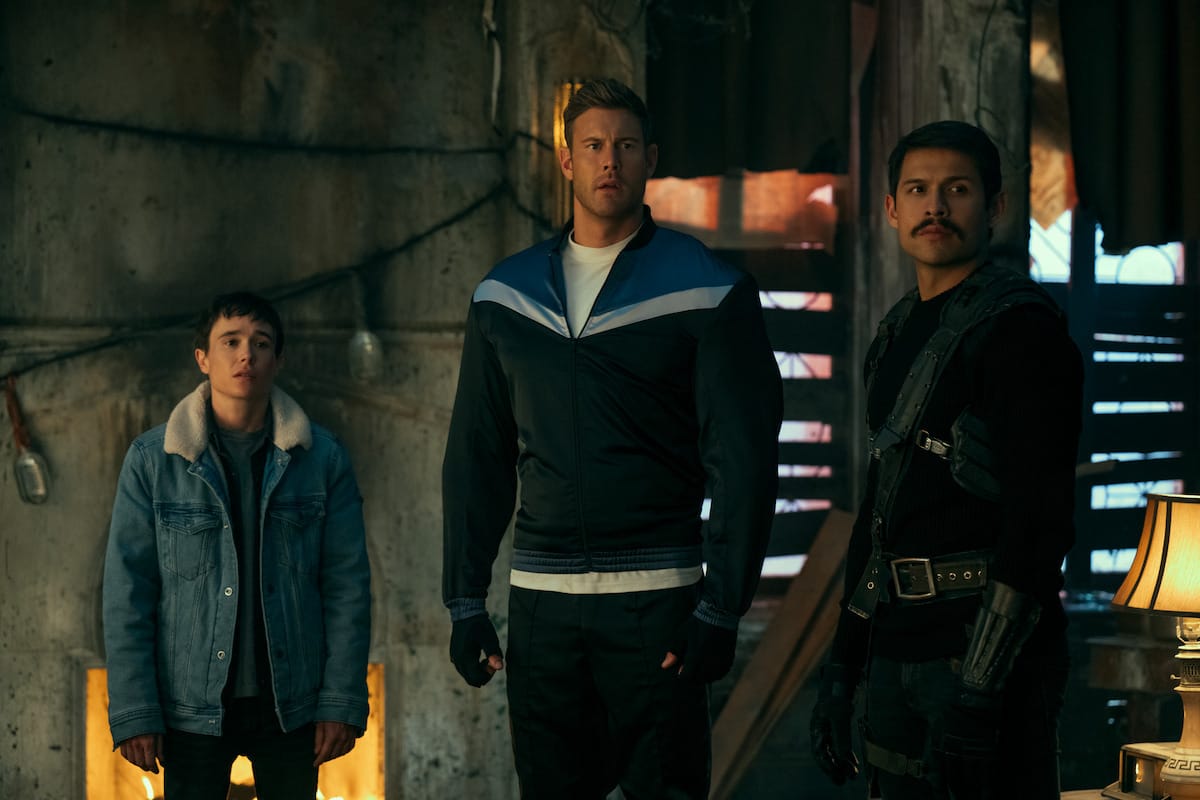
In December 2020, Elliot Page came out publicly as transgender. The response from The Umbrella Academy’s production was immediate and uncomplicated: Viktor Hargreeves would be trans in Season 3. No Very Special Episode. No tortured backstory. Just: Viktor is trans now, and the other characters love him, because that is what these characters would do.
Page's own public statement about the experience of finally living as himself is extraordinary reading. He described it as "overwhelming gratitude" and the feeling of "finally loving who I am enough to pursue my authentic self."
In a media landscape still full of films that use gender nonconformity as either punchline or horror element, letting a trans man play a trans man and just... getting on with the story, was a form of quiet decency that mattered more than it looked.
On the other side of the world, a battered bus in the desert was about to do something nobody expected,
Priscilla, Queen of the Desert (1994)
Australian, and ours to claim.
When Stephan Elliott was casting Bernadette, everybody turned the role down. Everybody. Terence Stamp was at the top of the list, but nobody thought he'd do it. This was the man who had been called the best-looking man in the world in the 1960s. The man who played General Zod. The man whose entire screen presence was coiled, dangerous, and masculine in the most conventional sense of the word. The honest truth is, he turned it down at first. It was his agent who eventually said to him, "Well, you're bored. You've just done superhero movies. Why don't you do something else?"
"I thought it was a joke," Stamp later said. "It wasn't anything I was looking forward to. It was, 'Fuck me, this is the last thing in the world I want to do.' It was like a nightmare." The fear was real, and the context mattered: they were coming out of the HIV/AIDS crisis. It was a taboo subject. Elliott understood. He looked at Stamp's career, the Italian years with Fellini and Pasolini, and thought: this was a man who took chances.
Stamp channelled that terror into something magnetic and unforgettable, the kind of performance that, as Elliott later recalled, turned "everybody to jelly."
In his own words: "It was only when I got there, and got through the fear, that it became one of the great experiences of my whole career. It was probably the most fun thing I've ever done."
Bernadette Bassenger, a transgender woman, a widow, a person of profound and slightly terrifying composure, is not the joke. She is, if anything, the conscience. And she was played with a dignity that remains genuinely rare, by the last man anyone expected to bring it.
Stamp became a gay icon. He said that gay men approaching him on the street to say how much they loved Priscilla brought "a light into my life." The film spawned a celebrated stage musical that has played to packed houses worldwide for two decades.
A sequel was in the works, the original cast returning, a story this time about ageing and what it means to grow old as a queer person, a subject, Elliott noted, that has never really been explored. The pandemic delayed it. Stamp, knowing he wasn't getting any younger, and adamant he would not be replaced by a digital clone, pre-shot all of his scenes months before his death. He wanted to put Bernadette down himself.
Terence Stamp died on 17 August 2025, aged 87.
The film is thirty-two years old. Watch it.

Shameless (US, 2011–2021)
Adaptation, yes, and the original UK series handles similar territory in its own ways. But the American version found something real in its willingness to embed gay storylines inside poverty, violence, and dysfunction without either sanitising them or making them a Very Special Episode. Ian Gallagher's relationship with Mickey Milkovich, closeted, explosive, embedded in a world with no safety net, was one of the most honest depictions of what it actually costs to be gay in communities that have never been given space to be anything but hard. The show's later trans storyline was imperfect, and the show knew it; the handling was earnest rather than expert, and there is something to be said for earnest. It tried, and it tried respectfully.
There are more. There will always be more, because this history is not a monument; it is a living thing. Every year, someone else has to be first. Every year, someone else finds out that the person they recognised on screen exists in the world, and therefore so do they. That first recognition can move a person from surviving to wanting a future.
That is not a small thing. That is, some days, everything.
Further viewing: The Birdcage (1996); But I'm a Cheerleader (1999); Hedwig and the Angry Inch (2001); Moonlight (2016); Disclosure (2020, Netflix — Laverne Cox on trans representation in Hollywood).
From the Librarium
A Portrait the World Tried to Hide
The Picture of Dorian Gray
Oscar Wilde wrote only one novel. He did not need to write another.

The Picture of Dorian Gray first appeared in July 1890 in Lippincott's Monthly Magazine, and almost immediately, the world set about trying to unmake it. The editor, J.M. Stoddart, had already cut approximately 500 words from Wilde's manuscript before publication: every scene, every line, every lingering glance that made the nature of Basil Hallward's devotion to Dorian Gray too legible. Even after the cuts, British reviewers condemned it as immoral, disgusting, and unfit for publication. The month's issue was pulled from shelves in London.
Wilde revised and expanded the novel for book publication in 1891, adding a preface that remains one of the most elegant defences of art ever written.
Oscar Wilde, The Picture of Dorian Grey, 1891
"There is no such thing as a moral or an immoral book," he wrote. "Books are well written, or badly written. That is all."
Five years later, the book was read aloud in court as evidence against him.
In 1895, Wilde was convicted of charges related to homosexuality and sentenced to two years of hard labour. The prosecutors used his own novel: the one that had already been censored, already been condemned, already survived one attempt at erasure, to demonstrate the character of the man they were destroying. He was released in 1897, broken in health and finances. He died in Paris in 1900, at forty-six.
He never wrote another novel.
The Book Itself
You probably think you know the story. A beautiful young man makes a Faustian bargain; his portrait will age and decay in his place while he remains eternally young. What follows is a study in corruption: of Dorian, whose soul darkens with every transgression; of Lord Henry Wotton, the brilliant, amoral aesthete who plants the idea; and of Basil Hallward, the painter who loves Dorian with a devotion the novel never quite names but never lets you mistake.
The queer reading of Dorian Gray is not a modern imposition. It is in the text, or rather, in what remains of the text after Stoddart's cuts, and in what Wilde added back in 1891, and in the manuscript Harvard University Press published in full in 2023, which restored what had been removed. In the original manuscript, Basil and Dorian walk home "arm in arm." Basil describes his relationship to Dorian as containing "extraordinary romance." These details were edited out before publication.
Wilde himself described the three central characters with characteristic precision: "Basil Hallward is what I think I am; Lord Henry what the world thinks of me; Dorian what I would like to be — in other ages, perhaps."
Oscar Wilde, in a letter to Ralph Payne (an admiring fan), 1894
"Basil Hallward is what I think I am; Lord Henry what the world thinks of me; Dorian what I would like to be — in other ages, perhaps."
"In other ages, perhaps."
The novel is a meditation on beauty, on corruption, on the cost of concealment, on what happens to a person who must hide the most essential thing about themselves from the world, who must keep their portrait locked in an attic while presenting a perfect face to society. It is a gothic horror story. It is also, unmistakably, something else.
The Machine, Still Running
In 2024, Netflix announced an adaptation of Dorian Gray, titled The Grays, set in the modern beauty industry. In a creative decision that managed to be both baffling and entirely predictable, Dorian and Basil were rewritten as siblings.
The book that was censored before publication. That was used to convict its author. That survived a century and a half to become one of the most celebrated novels in the English language. And the adaptation removes the queerness.
This edition has a section called This Is Not New. It documents the mechanism of erasure, burn the records, rewrite the history, call it a trend, repeat as required.
The Netflix announcement is not in that piece. But it could have been.
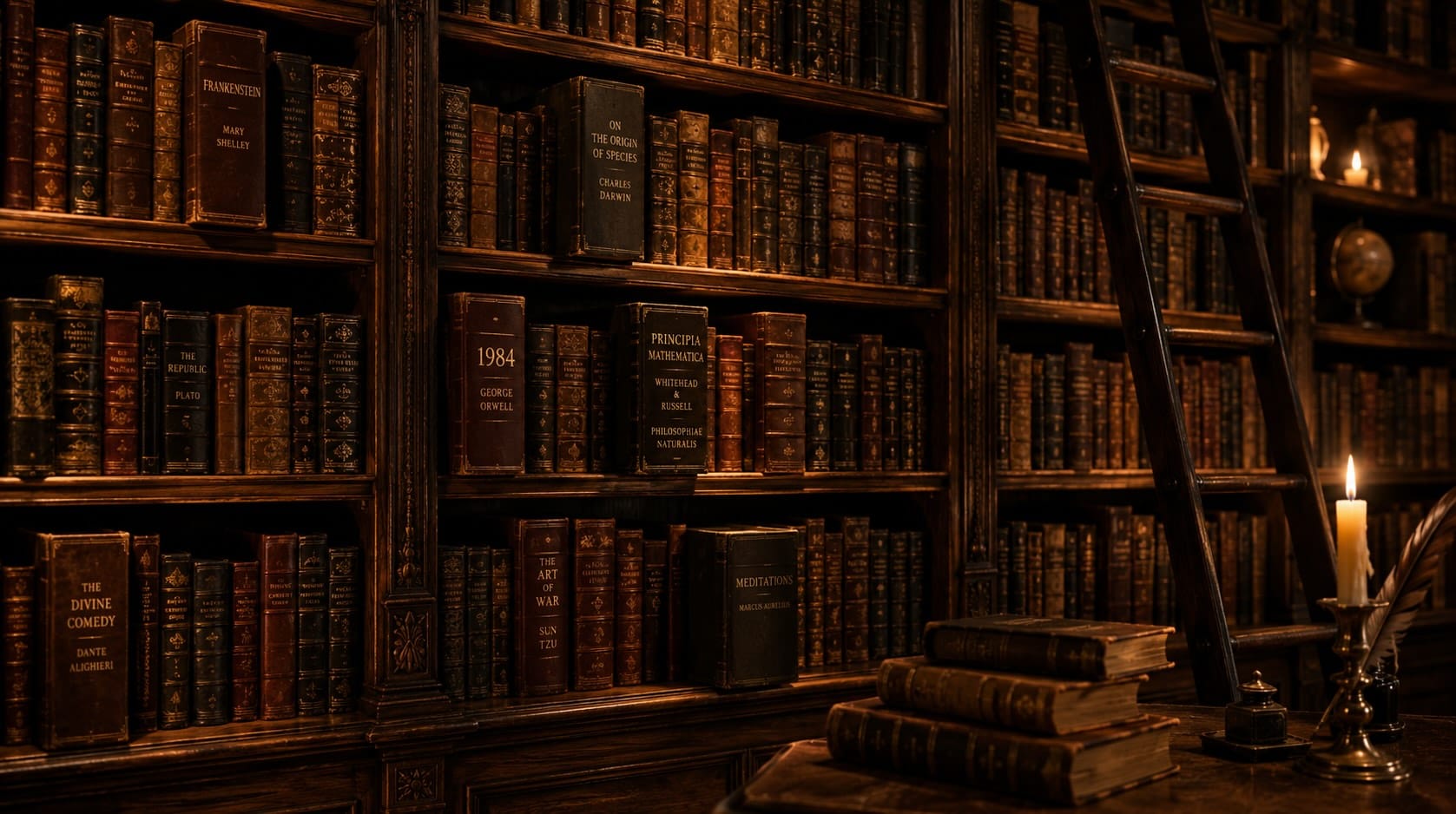
The Picture of Dorian Gray is now available in the Atlas Librarium — free, in your browser, no account required. Read the book they tried to destroy. Read what survived.
Projects & Progress
Slow but Steady
Things have been moving quietly behind the scenes this month, which is where most of the real work happens.
The website has had significant attention. WeRise policy pages have been redesigned for readability and accessibility; cleaner, lighter, more navigable. If you haven't visited lately, it's worth a look at archivistsatlas.com.au.
The newsletter itself has been the focus of much of this month's energy. New formatting, new styling, a proper sourcing and endnote system. Whether it shows, you're the judge of that.
The Librarium continues to grow. Back issues of The Atlas Brief are being added to the archive, and over the coming month, four new volumes will join the collection, details to follow when they're live.
WeRise deep research is ongoing. New policy pages are coming. The work is slow and careful, that's intentional.
And social media. We've been quiet. That changes this month. Bluesky is already proving to be the right room for the right conversation. More posts, more presence, more of the work finding its way into the world.
That's enough for now. Back to it.
— The Archivist
The Atlas Brief publishes monthly. Subscribe free at atlasmedia.press to receive future editions directly.