

The Atlas Brief - Vol VIII November 2026
Courage, democracy and care: voices after the US midterms, Australia’s voting rules, a beginner’s mental-health guide, and new paths through the Mouseion.

Editor's Note - November 2026
Courage, When You Can Afford It
Fame comes with certain advantages. Money. Influence. Lawyers. Entire teams employed to help you decide what to say. You might reasonably hope that somewhere between the publicist and the private dressing room, there would be enough room for a principle.


In September, Macklemore used his appearance on Ed Sheeran’s tour to advocate for Palestinian freedom. He explicitly distinguished criticism of Israel and opposition to genocide from hostility towards Jewish people. He subsequently lost his remaining support dates. His promoter confirmed that venues had refused to host shows with him on the bill. Associated Press
That is an artist doing something valuable with a stage: asking an audience to look beyond itself.


Pink reposted criticism of his performance, then explained her objections in a longer statement. She affirmed Palestinian humanity and the protection of children, while arguing that Macklemore could not decide how Jewish audience members experienced his words. Her concern about antisemitism deserves a hearing. So does the distinction he had expressly made. ABC News
To my mind, that distinction should have opened a conversation. Instead, the demand for Palestinian freedom became something a stadium audience apparently needed protection from.


Sheeran said the removal was the promoter’s decision and that he had tried to find a resolution. Large tours involve workers, contracts and consequences beyond the person whose name appears on the ticket. Those pressures are real. But his remaining supporting acts, including Finneas, Lukas Graham and Aaron Rowe, withdrew in solidarity. They demonstrated that accepting the arrangement was a choice. ABC News
How much security must a person accumulate before they can afford to disappoint someone powerful? For an artist with extraordinary reach and resources, surely there comes a point when influence should be useful for something beyond securing the next booking.
What stayed with me was Macklemore’s response. He maintained his account of what happened while expressing no ill will towards Sheeran. Friendship did not require silence; disagreement did not require humiliation. Associated Press
There was dignity in that. He had lost something, and still kept his attention on people suffering far more.
As Atlas returns, that feels like a useful place to begin. With people willing to use whatever room they have to speak, to question, and occasionally to make the powerful uncomfortable.
A platform is a remarkable thing to possess. We should expect something of the people standing on it.
End of the Editor’s Note ◆
The Brief: After the Wave
America has voted. Now comes the question of what its politicians will do about it.
For Australians who have followed American politics mainly through increasingly alarming headlines, November brought a substantial change. Democrats won sweeping victories in the US midterm elections, with the Associated Press projecting that they will control both chambers of Congress. Election results
Donald Trump remains president. Americans have elected a legislature with the power to challenge him.
A quick translation
Congress is America’s federal parliament, comprising the House of Representatives and the Senate. Every House seat and roughly a third of Senate seats come up for election every two years. Elections halfway through a presidential term are called the midterms. How it works
Unlike an Australian prime minister, the US president does not lose office simply because the opposing party wins the lower house. The presidency and Congress are elected separately. Congress makes laws, controls spending and scrutinises the executive; the president retains substantial powers, including the ability to veto legislation. The branches of government
The incoming Congress begins its term on 3 January 2027. That is when the new majorities begin exercising their authority. Congressional terms
The Democrats occupy the more progressive side of America’s two major parties, but the label covers a broad coalition. Business-friendly centrists sit alongside advocates of universal healthcare and much stronger protections for workers. A Democratic victory creates an opportunity. What that opportunity produces depends partly on which voices prevail.
Three names worth knowing
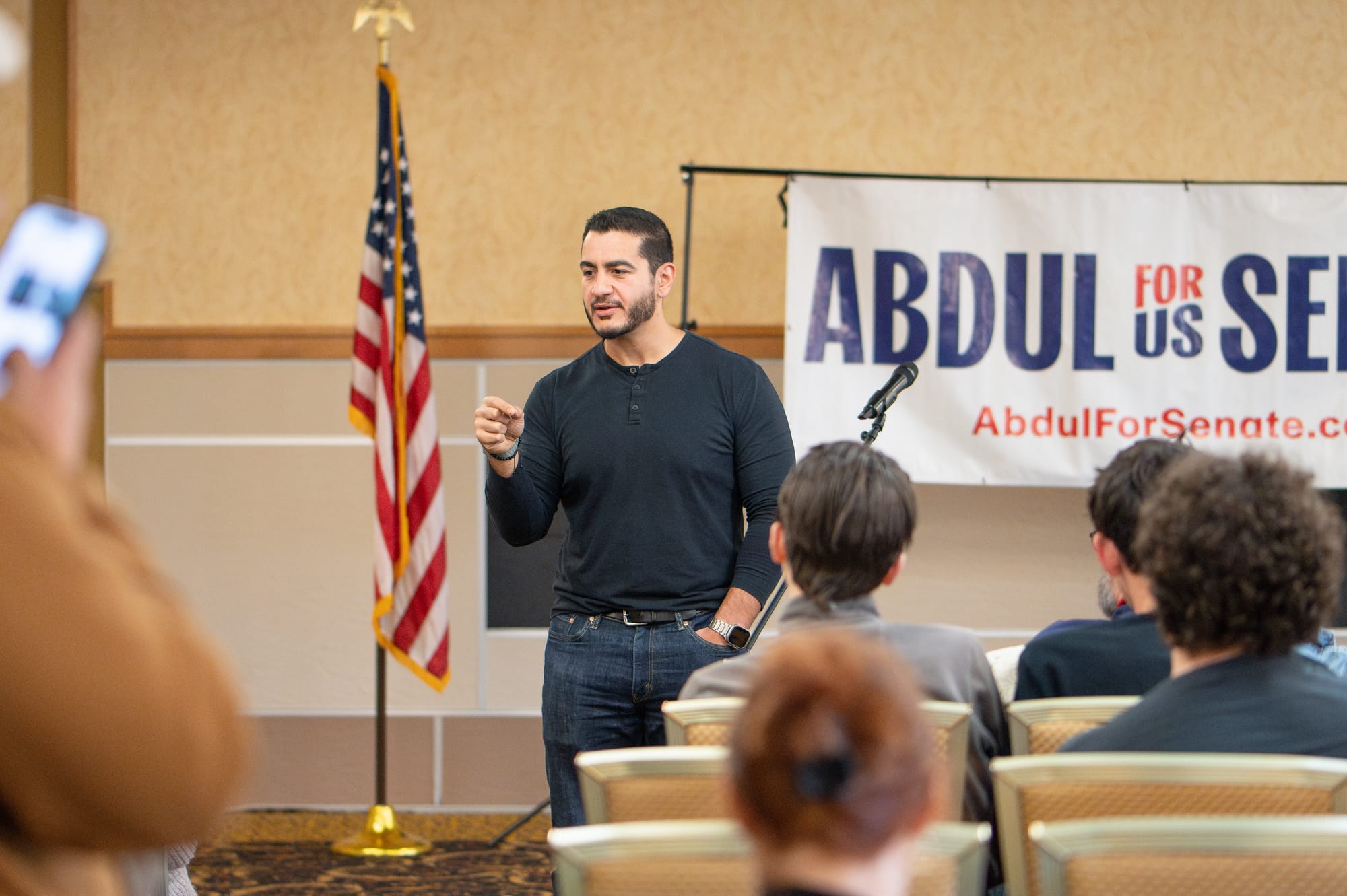

Dr Abdul El-Sayed, Michigan. A physician and public-health leader, El-Sayed won a Senate seat after campaigning on universal healthcare, opposition to outside money in elections and criticism of Israel’s actions. His healthcare platform explicitly supports Medicare for All, a proposal for universal health insurance in the United States. For Australians, the striking thing may be how familiar the underlying principle sounds: getting sick should not threaten your financial survival. Michigan result, healthcare platform


Troy Jackson, Maine. A logger and former state Senate president, Jackson defeated Republican Susan Collins. His campaign put working people, universal healthcare, cheaper medicines and the influence of wealthy interests near its centre. He is worth watching for whether those commitments become legislative priorities once he reaches Washington. Election result, campaign priorities


Chris Van Hollen, Maryland. Already a senator, Van Hollen has defended due-process rights in the case of Kilmar Ábrego Garcia. He is now challenging Chuck Schumer to lead Senate Democrats, with support from El-Sayed and Bernie Sanders. The leadership contest makes the argument about renewal tangible: who should lead, and what should this victory be used to accomplish? Due-process advocacy, leadership challenge
These are people to follow with interest and scrutiny. A campaign platform gives us something against which to measure their conduct.
An opportunity with obligations
We should resist declaring that one election has settled the argument about America’s future. Winning seats does not automatically deliver affordable healthcare, protect rights or remove money’s influence from politics.
But it puts people in positions where they can act.
That is where our attention should remain: on the bills introduced, the votes taken, the compromises explained and the promises quietly abandoned. Relief after an election is understandable. It should leave room for expectations.
And closer to home
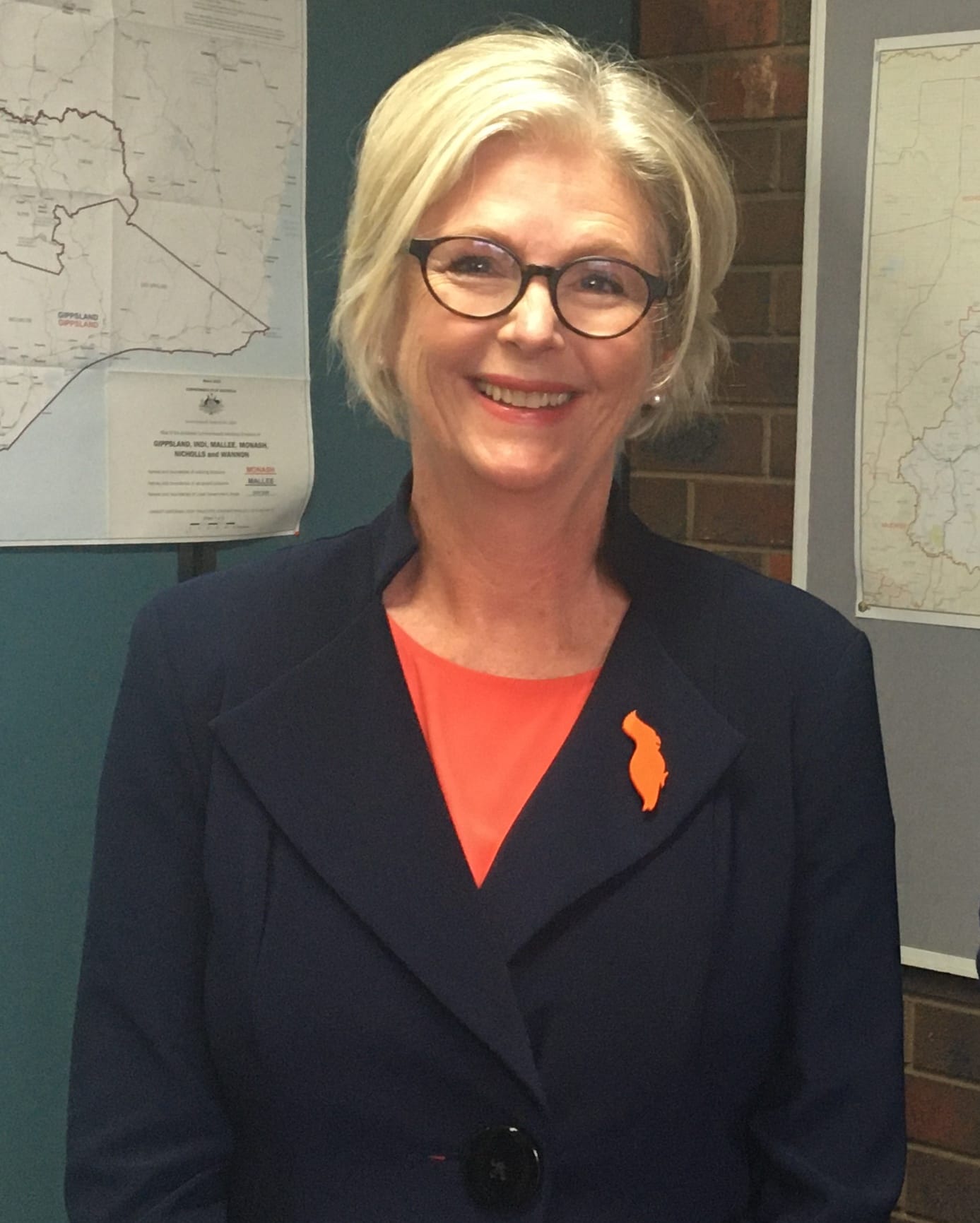

We close with respect and warm wishes for Dr Helen Haines. The latest hospital update we verified, on 6 November, reported that she was in a stable condition following the alleged attack in Wangaratta. We hope for her recovery and recognise her sustained work for integrity in public office. Health update, integrity work
Our hope for political renewal is modest enough to be reasonable: truthful debate, respectful disagreement and representatives willing to serve their communities. Leaders, rather than rulers. Everyone in public life deserves safety and basic dignity. Political trust is something they can earn through their conduct. We would very much like to have more reasons to give it.
End of the Brief ◆
Deep Dive: Democracy
You are legally required to vote. Understanding it is optional.
Voting is compulsory for Australian citizens over 18. Knowing what happens to your ballot afterwards is entirely your own business.
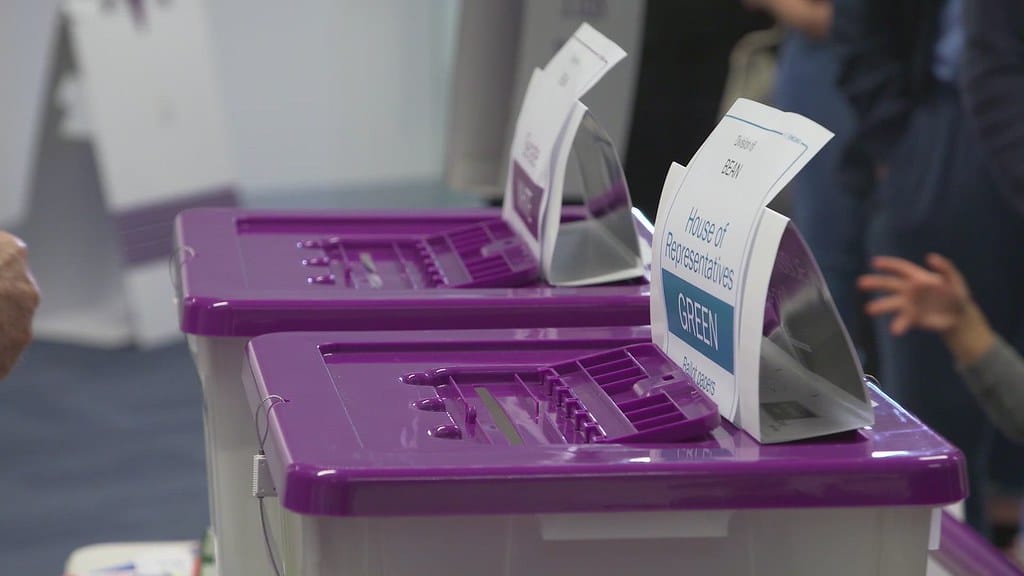
At the 2025 federal election, 5.6 per cent of House of Representatives ballots were ruled informal. That is 919,512 papers that did not count towards the result. It was in line with earlier elections, so this is not a one-off. It also varied wildly by seat, from about 2 per cent to 17 per cent depending on the electorate.
Some informal votes are deliberate. The AEC examined about 250,000 of them to work out what was going on, and it has said it will use the findings to improve how it explains voting.
How your vote actually works (two minutes, no exam)
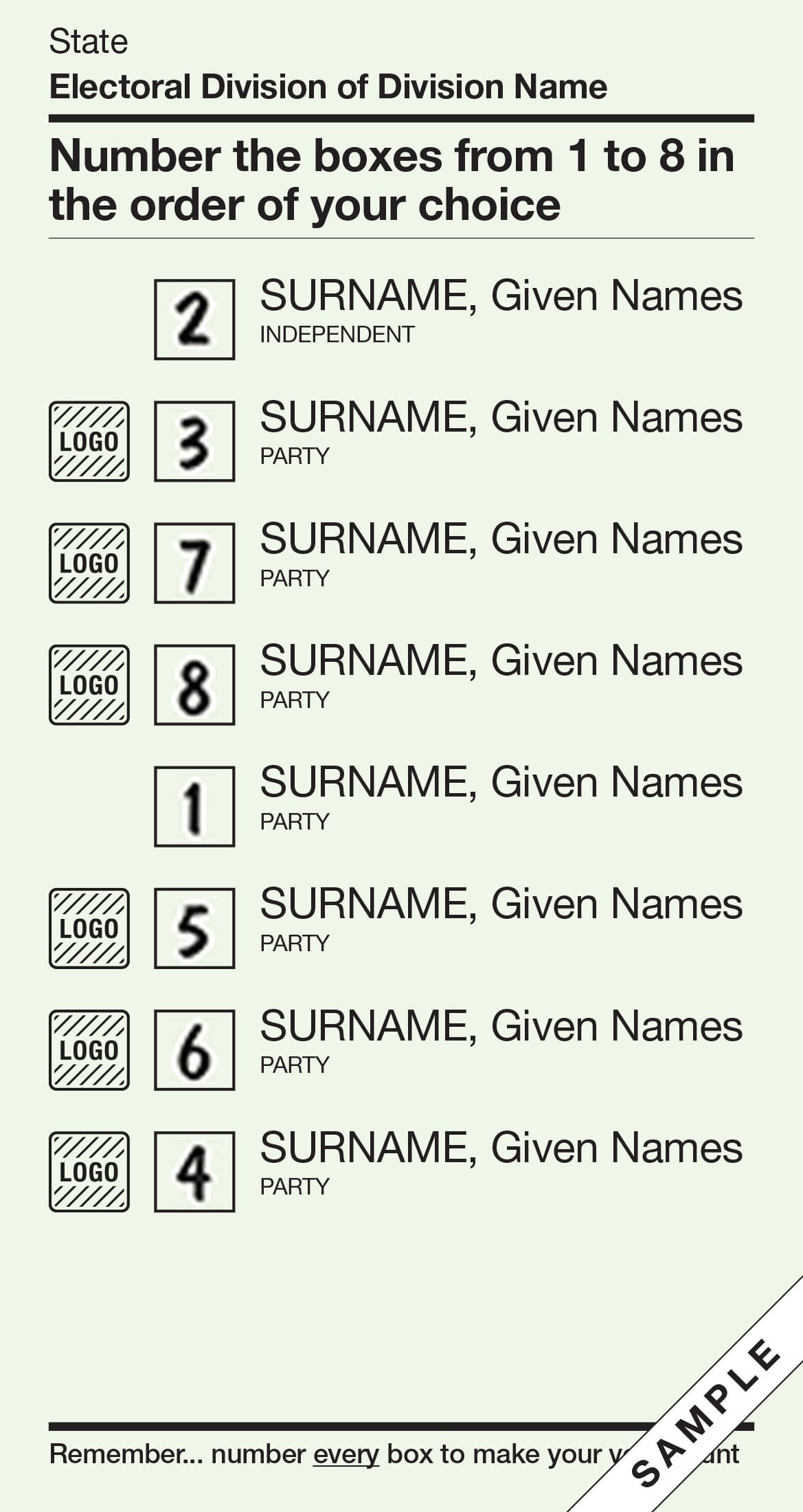

The House of Representatives. You rank every candidate on the green ballot paper. Everyone's first preferences are counted. If a candidate has more than half, they win. If nobody does, the candidate with the fewest votes is knocked out and their ballots move to whoever those voters ranked next. That repeats until someone passes 50 per cent. Your number 7 is not decoration.
The Senate. Different rules, a different ballot, and you can vote above or below the line with a minimum number of boxes to fill in either way. The AEC's How to Vote page has the detail.
How well do we understand the second one? An Australia Institute poll of 1,002 people found that only 31 per cent knew senators are elected by voters in their own state or territory, and 55 per cent chose an answer that could make it easier for a party they dislike to win. In the same research, more than four in ten thought putting a 6 beside a party made it harder for that party to get elected. A number beside a party is a preference for it, not a penalty against it.
The AEC found similar confusion between lower house and upper house voting after the 2016 election. We are a country that will queue for a sausage sandwich and then guess at the ballot paper.
The One Nation question
Here is the number that should focus the mind. At the 2025 federal election, One Nation won 6.40 per cent of House first preferences nationally. In the latest Newspoll we found, from October, it sat at 28 per cent, down from 30. One recent poll had it ahead of Labor for the first time, at 31 per cent.
Polls are not elections, and a primary vote is not a seat. But at the Farrer by-election, early results had One Nation's candidate on 44 per cent of the primary vote, on track for the party's first lower house seat in its 30-year history.
Is that the same as the MAGA movement in the United States? No. Our system is not theirs, and we should not pretend the playbook transfers cleanly. Here, voting is compulsory and preferences decide close contests. That makes it worth knowing exactly how those preferences flow.
But "not identical" is a long way from "nothing to worry about". Any movement polling this high can do real damage to institutions, to minority communities and to the quality of public debate, and it does not need an American-style playbook to do it. That is our view, and we are putting it plainly. The polling is the fact. The warning is the argument.
The Electoral Reform Act: the good, the bad and the clock
In February 2025, with the support of the major parties, Parliament passed the Electoral Legislation Amendment (Electoral Reform) Act 2025. The AEC calls it the biggest update to the Electoral Act in 40 years.
What is good. The disclosure threshold drops to $5,000, donations must be disclosed faster, and there are caps on donations and spending. Australia Institute polling found more than four in five Australians back real-time disclosure and a lower threshold. Even critics of the law have said it brings real democratic improvements, such as near-real-time disclosure.
What is the problem. Independents and small parties argue the design tilts the field. As reported at the time:
- Independents face a spending cap of $800,000 per electorate, while parties have a national cap of $90 million.
- Analysts argue that major parties can promote their generic brand or a frontbencher in another seat without it counting against the capped spend.
- "Nominated entities" can receive money outside the donation caps. Independents do not get that privilege.
- An amendment to lift the cap for non-incumbent independents by 150 per cent was rejected. Independents also offered to split the bill, backing the disclosure parts while negotiating the caps, and that was reportedly refused.
- Grattan analysis found that nine of the 11 independents who won in 2022 spent more than $1 million each. Under the new cap, they could not have.
The annual donation cap is $50,000. Professor Orr has argued that, because wealthy donors can give across state lines, to separate candidates and to third parties, the effective cap is closer to $1.6 million.
The government's case, put by Special Minister of State Don Farrell, is that the reforms improve transparency around campaign spending. The transparency half of that is true, and popular. Our concern is the other half.
What happened next. The public reaction was not what you would expect from a law designed to lock people out. After the bill passed, independents including Allegra Spender reported a surge in small donations, with nearly 300 contributions in a week, almost half the number of donors in her entire 2022 campaign.
The clock. The major funding and disclosure reforms were meant to start on 1 July 2026. The Canberra Times reported they were pushed out as the AEC dealt with implementation challenges. The AEC now lists the start date as 1 January 2027.
Meanwhile, former independent MP Zoe Daniel and former senator Rex Patrick have launched a High Court challenge, arguing the caps infringe the implied freedom of political communication. It is likely to be heard in early 2027. If that timing holds, the rules could take effect before the court has ruled on them.
Our view. Keep the sunlight. Fix the scales. Lower thresholds and fast disclosure are the part almost everyone wants. The caps and exemptions are where a level playing field gets tilted, and if those start on 1 January untouched, we will be running federal elections under rules that the High Court may later find were unconstitutional. We would rather the problem was fixed before the first election under the new rules than after.
What Australians say they want

The 2025 Australian Election Study asked people to rate a range of democratic reforms. Citizens' assemblies came out as the most favoured option. A recent Grattan Institute report found support for democracy in Australia is high, but satisfaction with how it works is more fragile.
Support is not the problem. The gap between "I believe in this" and "I understand how it works" is. Closing that gap is the cheapest democratic reform on offer.
What you can do
- Practise your ballot. The AEC's How to Vote page takes five minutes. House: rank every box. Senate: know the minimum.
- Tell your MP and your senators what you think of the 1 January start. A short, specific email is more useful than a long angry one.
- Read about citizens' assemblies. They are the reform people say they want most, and almost nobody has been shown how one works.
End of the Deep Dive ◆
Systems and Signals: So, You Need Help
A beginner’s guide to a system you probably hoped you would never need.
You have barely slept. Ordinary conversations have started carrying meanings nobody else seems to hear. Something feels terribly wrong, although you may be more convinced that the problem is everyone around you.
Perhaps you recognise that you need help. Perhaps someone you love recognises it first.
Until this week, Australia’s mental-health system was something other people used. Now you need to understand it, while frightened, exhausted and possibly struggling to trust your own thoughts.
This is a poor moment to discover that healthcare comes with several different entrances.
First, you need an assessment
Psychosis can involve hearing or seeing things others do not, strongly held beliefs that others do not share, or difficulty organising thoughts. It can occur with different illnesses and medical conditions. Experiencing it does not, by itself, tell you what diagnosis you have.
New symptoms need prompt medical assessment. If there is immediate danger, severe confusion, or someone cannot stay safe, call 000 or go to an emergency department. Otherwise, seek urgent clinical advice rather than waiting for a routine counselling appointment. Treatment can help, and recovery is possible. Healthdirect: psychosis
In Queensland, the round-the-clock public mental-health access line connects you with clinicians who can assess the situation by phone and direct you to an appropriate service. Someone supporting you can call for advice too. Other states have their own arrangements; the contacts are collected at the end of this article. Queensland’s mental-health access line
You do not need to arrive with a diagnosis. Explaining what has changed is enough to begin.
“But I have private cover”
You may have paid for private health insurance for years. Naturally, you assume that when something serious happens, the private hospital will be there.
It may be. It may also be unable to admit you.

Australia has overlapping public and private mental-health services. Private care is not entirely privately funded: Medicare contributes to eligible medical costs, alongside insurance benefits and the patient’s own payments. But a policy can have restricted psychiatric benefits, excesses and gaps. Cover is a financial arrangement, not a promise that a particular hospital can provide every kind of care. Commonwealth Ombudsman: mental-health treatment and insurance
There is also the question of what the hospital is authorised and equipped to do. In Queensland, detention for involuntary mental-health treatment must occur within an authorised mental-health service. Some private services are authorised, sometimes for limited purposes. Others cannot provide that pathway. Queensland Health: authorised services
The frightening discovery is that you can have insurance and still need care elsewhere. Ask the treating team what level of care is required, which services can provide it, and why a particular admission is being recommended.
You deserve an explanation you can understand.
The public door
Public hospital units and community mental-health teams provide specialist care, including care during serious episodes. Admission commonly happens through an emergency department or community team. Public services also provide treatment outside hospital; entering the system does not automatically mean being admitted. Healthdirect: Australian mental-health services
An acute ward can nevertheless be a confronting introduction. You may encounter restrictions, unfamiliar routines and people experiencing very different kinds of distress. Even necessary care can feel frightening when nobody has explained what is happening.
A person who is unwell still needs privacy, reassurance and ordinary human consideration. Families need explanations too. A hospital’s responsibility to keep someone safe should include helping them understand their surroundings.
The quality of that experience matters. It can shape whether someone feels able to seek help again.
Who gets to decide?
Being mentally unwell does not automatically remove your right to make decisions.
In Queensland, the starting assumption is that you have capacity to decide about your treatment. Being able to decide with someone’s assistance still counts. Involuntary treatment requires specific legal criteria, including impaired decision-making capacity and a serious risk of harm or deterioration. Less restrictive alternatives must be considered. Other jurisdictions have different laws. Queensland: consent and treatment authorities
Your family may need to advocate, explain what has happened, or help you understand your options. They do not automatically acquire the right to consent to everything on your behalf.
While you are well, consider who you would trust to support you. Queensland allows you to appoint a nominated support person, with a formal role in receiving information and supporting you through treatment and review processes. That appointment is different from appointing someone to make healthcare decisions. An Independent Patient Rights Adviser can explain these distinctions and help you communicate with the treating team. Patient rights and support people
For the person beside the bed, useful questions include: What happens next? Who is coordinating care? What information would help you? Who should we contact if things worsen?
There are doors before the emergency department

Most people seeking mental-health support are not experiencing psychosis. You may be anxious, grieving, depressed, overwhelmed or simply finding daily life harder to manage.
You are allowed to ask for help at that stage.
A GP is one starting point. Explain what is happening and ask what support is appropriate. A mental-health treatment plan can provide Medicare rebates for eligible psychological treatment. A rebate does not necessarily cover the whole fee. Ask about the gap, bulk billing and waiting times before booking. Services Australia: mental-health care
Medicare Mental Health Centres offer a free starting point. You can walk in without a referral, appointment or treatment plan. They provide support and help connect people with further care, including families and carers. They are not an emergency service. Find a Medicare Mental Health Centre
Queensland’s Crisis Support Spaces offer another option for significant distress when urgent medical care is not required. They are free and voluntary, bringing together peer workers and clinical support. Locations and access arrangements vary, so check your local service. Queensland Crisis Support Spaces
Private appointments are another pathway, where affordable and available. Before committing, ask about referrals, fees, rebates and the plan if your needs become more urgent. Private psychiatric appointments outside hospital generally rely on Medicare rather than hospital insurance; some extras policies contribute to psychology or counselling. Commonwealth Ombudsman: what insurance covers
Finding the right support may take more than one conversation. Ask the first service to help you find the next one.
Before it becomes unbearable
Waiting can make the practical task harder. Making appointments, explaining symptoms and organising transport all require energy that illness can steadily take away. With psychosis, longer periods without treatment are associated with poorer outcomes. Healthdirect: treatment and recovery
That is an argument for making help easier to reach. It is never a reason to blame someone who could not reach it sooner.
If you are already in crisis, you have not missed your chance. If you are struggling quietly, you do not have to wait for your life to fall apart before asking.
Tell someone. Make the appointment. Bring a trusted person if that helps. Ask what is free, what costs money, and what happens next.
Mental healthcare belongs in ordinary life, alongside the other care that helps us stay well. Everyone deserves access to it, including before the situation becomes an emergency.
Mental-health contacts at a glance
- Emergency: 000. Immediate danger or urgent medical care.
- Lifeline: 13 11 14. Crisis support, 24/7.
- Queensland Health, 1300 MH CALL: 1300 642 255. Public mental-health assessment and referral, 24/7. Details
- Medicare Mental Health: 1800 595 212. Free service navigation, weekdays 8:30 am–5 pm, excluding public holidays. Centres offer free walk-in support; not emergency care. Find help
- Medicare Mental Health Check In. Free early support for people aged 16 and over with mild mental-health difficulties. Access online
- Queensland Crisis Support Spaces. Free, voluntary support when urgent medical care is not needed; local access and hours vary. Locations
- GP and psychological treatment. Ask about bulk billing and gaps. Eligible treatment plans: up to 10 individual and 10 group Medicare-rebated sessions per calendar year. Medicare details
- Private treatment. Ask your doctor, hospital and insurer about eligibility, waiting periods and written gap estimates. Insurance guide
- Queensland patient rights. Ask the treating team for an Independent Patient Rights Adviser. Rights and support
- Outside Queensland. Use your state or territory’s public mental-health access service. National directory
General information, checked November 2026. The legal examples are Queensland-specific; arrangements elsewhere differ. This guide does not replace individual medical or legal advice.
End of Systems and Signals ◆
Culture: A country worth reading
Two kinds of courage, and a very Australian argument.
The claim that Australia has no culture is an ambitious thing to say within reach of a bookshelf.
Here is a small experiment. Read Banjo Paterson’s The Man from Snowy River, then Henry Lawson’s The Drover’s Wife. One gives you the thunder of a ride down a mountainside. The other gives you a woman keeping her children safe through a long night. Both have something to say about courage. They disagree rather productively about where to look for it.
Paterson understands the pleasure of a story gathering speed. An underestimated rider, a difficult landscape, a chance to prove himself: the poem has the momentum of a crowd leaning forward. Read it aloud and listen to how much of the excitement lives in the rhythm. A familiar title can make us forget that somebody had to make the thing work.
Lawson brings the scale closer. A snake has gone under the house. The drover is away. His wife must protect the children, with a dog, a stick and very little prospect of assistance. Around that immediate danger, the story gathers the labour and loneliness of her life. Her courage is the work of getting through the night. It is less convenient for a statue.
Put the two together and an interesting question appears: which kinds of bravery do we celebrate, and which do we quietly expect? The spectacular act makes a fine story. So does the person who keeps going when nobody has gathered to applaud.
Neither work can stand for the whole country. They belong to a settler literary tradition, within a place whose Aboriginal and Torres Strait Islander cultures long precede them and continue to grow. Reading the old favourites carefully should make us more curious about the voices beyond them, too.
Culture has room for pleasure, discomfort, beauty and a good argument. These works remain worth returning to because a familiar story can yield a different question when our own lives have changed.
Read them for the pleasure first. Then ask whose courage you noticed.
Read Paterson’s poem on Wikisource · Read Lawson’s story on Wikisource
End of Culture ◆
From the Librarium: Familiar names, fresh encounters
A few places to begin, or begin again.
The Librarium’s shelves have been filling out while the newsletter has been quiet. There are familiar names, substantial arguments and several people who would be appalling dinner guests. Here are six invitations to browse.
- Wuthering Heights · Emily Brontë
A return to the Yorkshire moors, where love, possession and revenge make a remarkably poor household arrangement. Read it for the atmosphere, then notice who gets to tell the story. - Pride and Prejudice · Jane Austen
Courtship, money, reputation and the inconvenience of being certain you understand someone. Austen’s wit remains excellent company, especially when she is dismantling somebody’s self-importance. - Frankenstein · Mary Shelley
An ambitious creator discovers that making a life and taking responsibility for it are different projects. The creature’s need for care and recognition gives this famous story its enduring sting. - Twenty Thousand Leagues Under the Sea · Jules Verne
Climb aboard the Nautilus for scientific wonder, underwater adventure and the troubling company of Captain Nemo. Curiosity can take you a long way. Choosing your travelling companions remains important. - A Room of One’s Own · Virginia Woolf
What makes creative work possible? Woolf turns towards money, time, education and a room in which a person can think. An inviting place to consider whose talent gets the conditions it needs. - The Mathematical Principles of Natural Philosophy · Isaac Newton
The Principia takes us into the mathematical architecture of motion and gravitation. A steeper climb than the novels, admittedly, but the Librarium ought to have a few demanding staircases.
Each book page offers context and a way into the work. If none of these calls to you, the discovery window in the Librarium desk lets you turn through volumes without arriving with a title in mind.
Browse the Librarium. You are allowed to come in for one book and leave considering something entirely different.
End of Librarium ◆
Projects and Progress: The doors are open
First, an apology for the long silence. The Brief has been away longer than intended. Thank you for finding your way back, or for arriving for the first time. Behind the scenes, we have been rebuilding the places where this work lives. It is good to have an edition taking shape again.
A website with more room to explore
The Atlas Media website has had a substantial revamp. The aim is to make the connections easier to follow: from a policy question to its evidence, from a book to an unfamiliar idea, and from a passing curiosity to something worth reading properly.
The work continues. A website this varied will always have something that needs attention, but it is becoming a place we can invite people into with much more confidence.
Scriptorum is open and filling
The Mouseion’s documentary collection now has a public home. Scriptorum brings together research papers, reports and guidance, organised around the twelve Academe knowledge pillars.
Early entries include a review of effective learning techniques and research on Chankillo’s ancient solar observatory. The collection is still small. That gives us a clear job: keep adding useful material, with the author, source and route to the document visible.
Some entries include a copy Atlas is permitted to host. Others take you to the original publisher or official source. The catalogue makes that distinction, so an open door to knowledge does not become a careless claim over somebody else’s work.
A clearer home for the Brief
The newsletter has had its own rethink: more space to read, photographs beside the people being discussed, useful reference cards and clearer beginnings and endings. The intention is a monthly edition that makes room for evidence, culture and the occasional raised eyebrow.
We are still building the readership. If something here earns a conversation, passing it to one person who might enjoy it would help. No elaborate launch ceremony required.
End of Projects and Progress ◆
Systems do not fix themselves
A democracy and a health system look nothing alike. They share one weakness: both are designed by people who will never have to use them from the bottom. The fix for both starts the same way. Learn how the machine works, say so loudly when it does not, and make sure the people who run it can hear you.
See you on the 15th of December.
Notes & Sources
Primary sources are preferred where available.
Reporting
- Newspoll shows One Nation dipping, The New Daily, 12 October 2026
- One Nation ahead of Labor in a poll for the first time, The Daily Aus
- One Nation set to win Farrer by-election, PS News
- One Nation funding linked to delay in electoral reforms, The Canberra Times
- Ex-MPs launch court challenge against poll spend caps, AAP
- Campaign targets neglect of Aussies' mental health, AAP
- Spike in donations to independents after election spending caps pass parliament, 14 February 2025 (news summary)
- The AEC will review informal votes cast at the election, The Daily Aus
Primary sources
- Informal Ballot Paper Review, 2025 Federal Election, Australian Electoral Commission, April 2026
- FAQs: Funding and disclosure legislative changes, AEC, updated 29 July 2026
- Fact sheet: Explaining the changes to political funding and disclosure, AEC
- 2025 Federal Election first preferences, AEC tally room
- 2025 Australian Federal Election (FlagPost) and Electoral finance reform (Policy Brief 2025-26), Parliamentary Library
- Medicare Mental Health Centres, Medicare Mental Health, and Medicare Mental Health Check In fact sheets, Department of Health, Disability and Ageing
- Doorstop interview with Assistant Minister McBride, Glenorchy, 8 October 2026
- Crisis support spaces, Queensland Health
- Treatment and care for patients at authorised mental health services, and the AMHS declaration form, Queensland Health
- Australia's mental health system, Australian Institute of Health and Welfare
- Submission 463 (Catholic Health Australia), Productivity Commission Inquiry into Mental Health
Research and analysis
- Polling: Senate Voting and Election Awareness Issues, and Electoral Reform Bill analysis, The Australia Institute
- The 2025 Australian Election Study, summary by newDemocracy
- For the people: Future-proofing Australia's democracy, Grattan Institute (summary via First Links)
- Sweeping reform of the electoral laws puts democracy at risk, The Conversation
- Physical health of people with schizophrenia needs urgent national attention, University of Sydney
- The costs and impacts of the deadly combination of physical and mental illness, Victoria University
- Uniparty Grab: Independents take electoral reform to the High Court, Michael West Media